Đào Minh Tri
"Làm sơn mài như Nguyễn Gia Trí thì không mấy ai theo được."

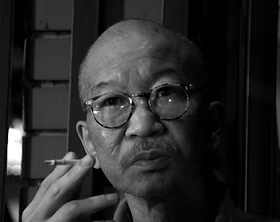
Đào Minh Tri is one of the most prominent figures in Vietnamese art after 1975, contributing to the emergence of freedom and individualism in visual art, especially during the Đổi Mới (Renovation) period. A graduate of the Vietnam College of Fine Arts in 1976, he later taught at the Ho Chi Minh City University of Fine Arts (1976–1993) and served as Deputy General Secretary of the Ho Chi Minh City Fine Arts Association.

Even as a student, Đào Minh Tri quickly established a distinct path: turning away from the dominant socialist realism that had prevailed for decades, he pursued a personal form of expression—mining surreal and abstract motifs to elevate inner freedom and philosophical introspection. The recurring fish and human symbols in his work are arranged within complex spaces, where rough contours and unorthodox compositions evoke the primal, prehistoric spirit of early art. Influences from Picasso, Matisse, Chagall, and Miró are present not as imitation, but as elements for a journey of visual self-liberation. In his boldness, Đào Minh Tri revitalized Vietnamese lacquer painting—preserving its national soul while pushing the medium to the edge of contemporary expression.
Along with the reformist efforts of the “Group of 10” and the “New Works” exhibition in southern Vietnam during the early 1990s, Đào Minh Tri was among the pioneers of a strong wave of artistic individualization. As artist Lương Xuân Đoàn noted, his work “possesses a quiet allure and a lasting novelty for future generations”—an art that is understated yet profound, leaving an enduring mark on the history of contemporary Vietnamese painting.