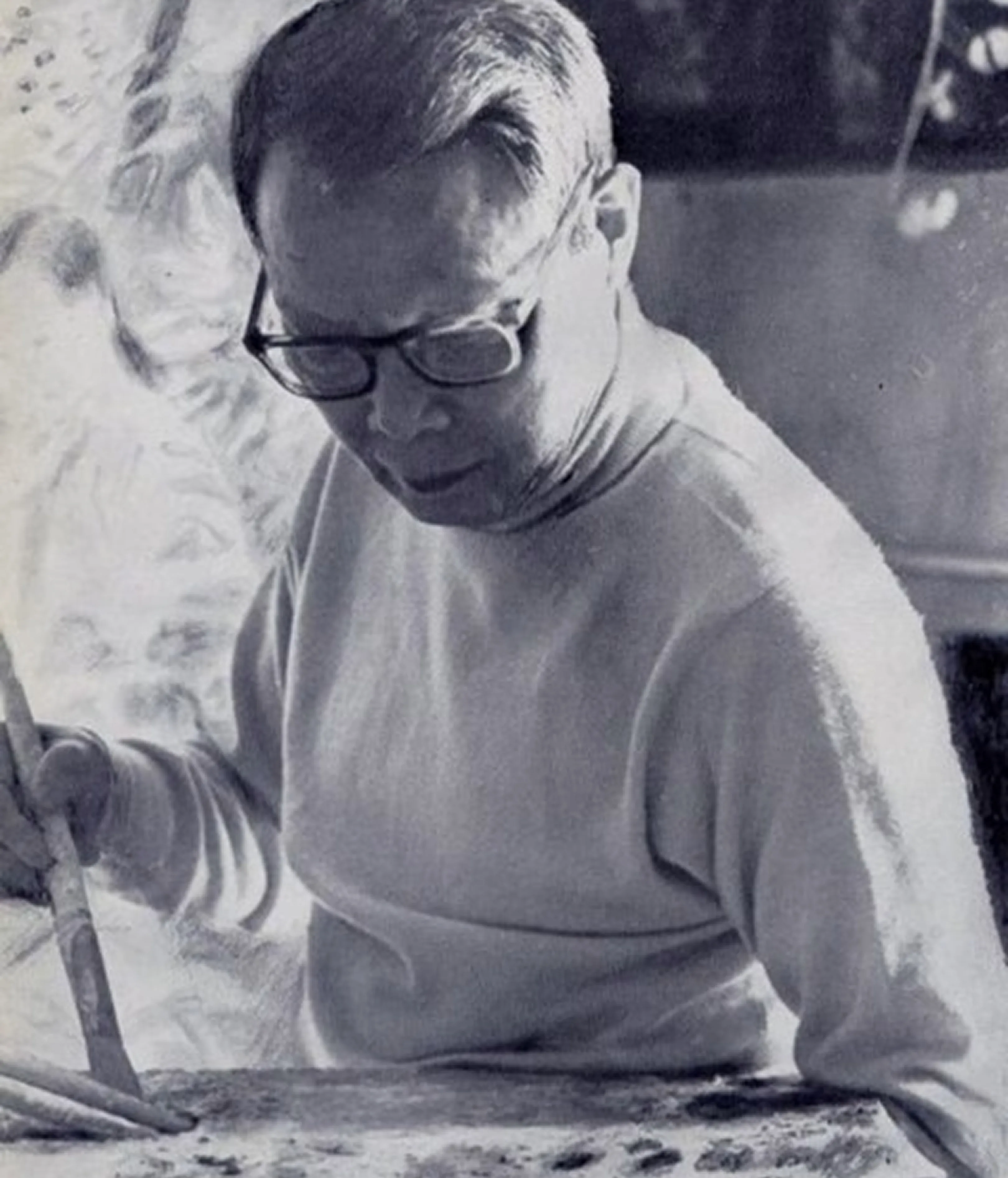
Le Quoc Loc

His artistic practice is most closely associated with lacquer painting. Working with gold leaf, silver leaf, eggshell, vermilion, and black lacquer, he developed a meticulous layering process that created remarkable spatial depth and a sense of movement across the surface. Through an innovative approach, Loc expanded lacquer beyond its traditional decorative function, establishing it as a powerful medium for artistic expression.
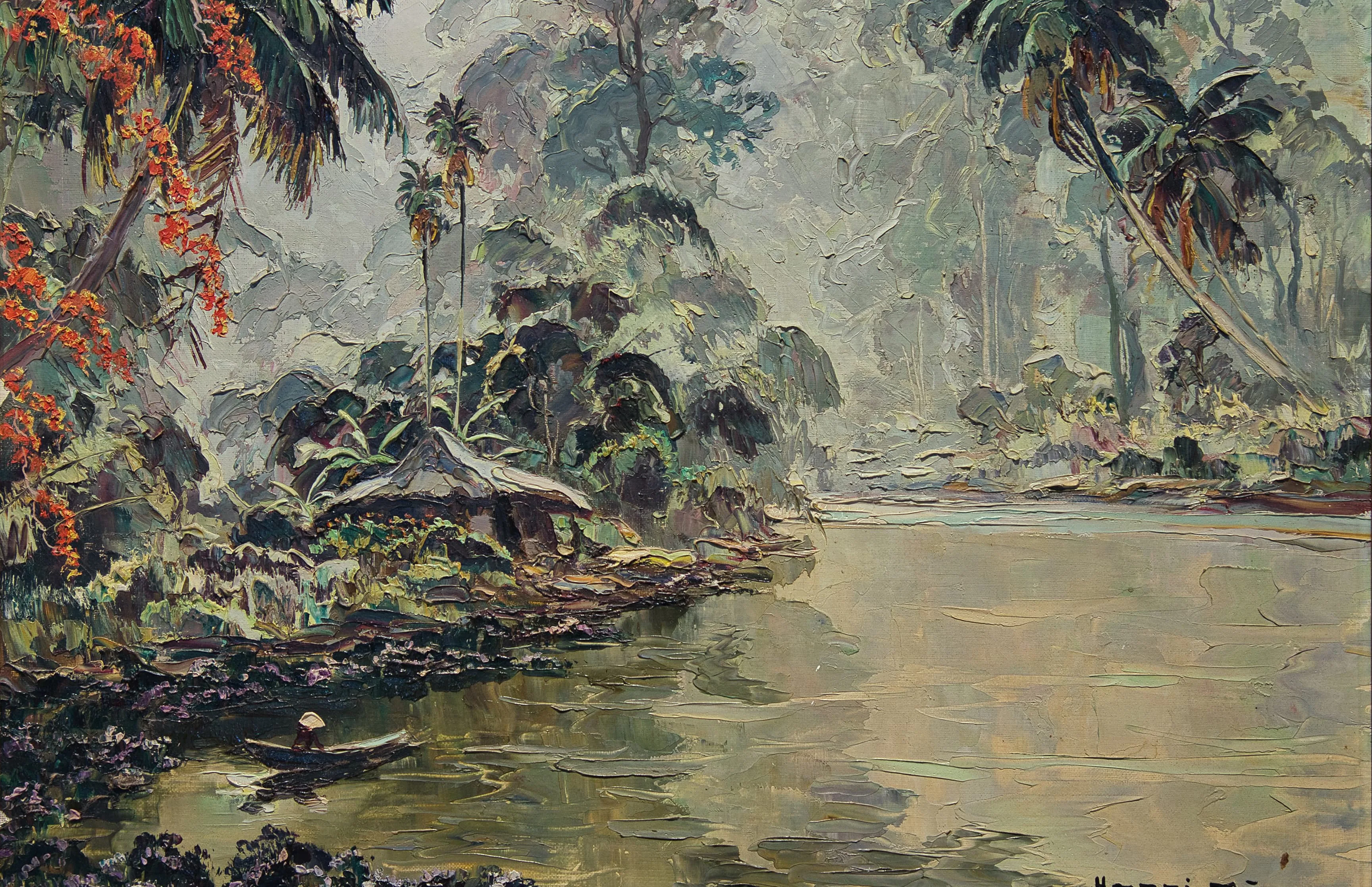
His oeuvre presents a coherent visual world centered on the rural landscapes of northern Vietnam, agrarian life, traditional festivals, alongside depictions of the resistance movement following the August Revolution of 1945.
Through a painterly language that seamlessly bridges the sensibilities of Eastern traditions and the formal innovations of Western modernism, Le Quoc Loc created lacquer masterpieces that embody the simple yet understated spirit of rural Vietnam.
His major works include Temple Festival (1939), Paysage de Phnom Penh (1943), Northern Landscape (c. 1944), Passing the Old Village (1957), Scorched Earth Resistance (1958), Preserve Peace (1960), Crossing the Temple Slope (1974), and From the Darkness (1982). The period from 1957 to 1962 is widely regarded as the golden era of Vietnamese lacquer painting, during which Lê Quốc Lộc emerged as one of its defining voices.
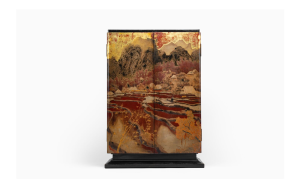
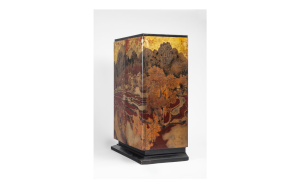
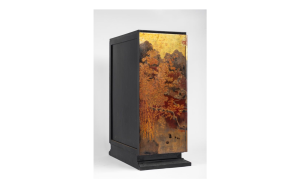
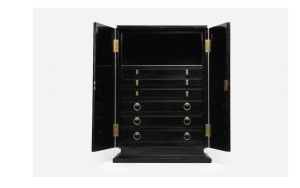
Le Quoc Loc’s lacquered armoire (before enframing) exemplifies the very codified and idealised vision of the northern Vietnamese rural landscape (image credit: Marc Labarbe, Toulouse) .
After 1945, Lê Quốc Lộc held a number of positions in Vietnam’s cultural and arts institutions, including Head of the Fine Arts Division of the Propaganda Department of Military Zone III (1947-1954) and later, Deputy Director of the Gia Định School of Applied Arts (1959-1967). He became a member of the Vietnam Fine Arts Association since 1957, and was posthumously awarded the Hồ Chí Minh Prize for Literature and Arts in 2000. He passed away in Hanoi on 8 May 1987.