Joseph Inguimberty
"Làm sơn mài như Nguyễn Gia Trí thì không mấy ai theo được."

One of Inguimberty’s most lasting contributions to Vietnamese art was his pioneering role in transforming traditional lacquer (sơn ta) into a medium for modern painting. In 1927, he was the first to propose the establishment of a lacquer workshop on campus, encouraging students to experiment with sơn ta in a spirit of innovation. By 1938, under the leadership of Évariste Jonchère (1892–1956), lacquer was officially included in the curriculum, taught by artisan Đinh Văn Thành (1898–1977) and French painter Alix Aymé (1894–1989).From his earliest days in Indochina, Inguimberty demonstrated a passionate love for nature, light, landscape, and local life. He did not hide his admiration for the rice fields, villages, and the simple beauty of the Annamese people — a sentiment he expressed through strong brushwork and his signature mossy green palette, neutral and deeply attuned to the terrain. Art critic Nguyễn Quang Phòng once remarked that Inguimberty painted “exactly like a Vietnamese artist who understands and loves his homeland.” Although his time was limited due to teaching duties, his depictions of rural life and rice paddies were always marked by authenticity. Joseph-Marie Inguimberty was one of the pioneers and most influential figures in the history of modern art education in Vietnam. Born in 1896 in Marseille, France, he graduated from the École nationale supérieure des Arts Décoratifs in Paris and won numerous major awards, including the Blumenthal Prize in 1922 and the French National Prize in 1924. These impressive achievements caught the attention of Victor Tardieu, founder of the École des Beaux-Arts de l’Indochine (EBAI), who invited him to Hanoi in 1925 to serve as a lecturer in decorative arts and modeling at the then-nascent EBAI.
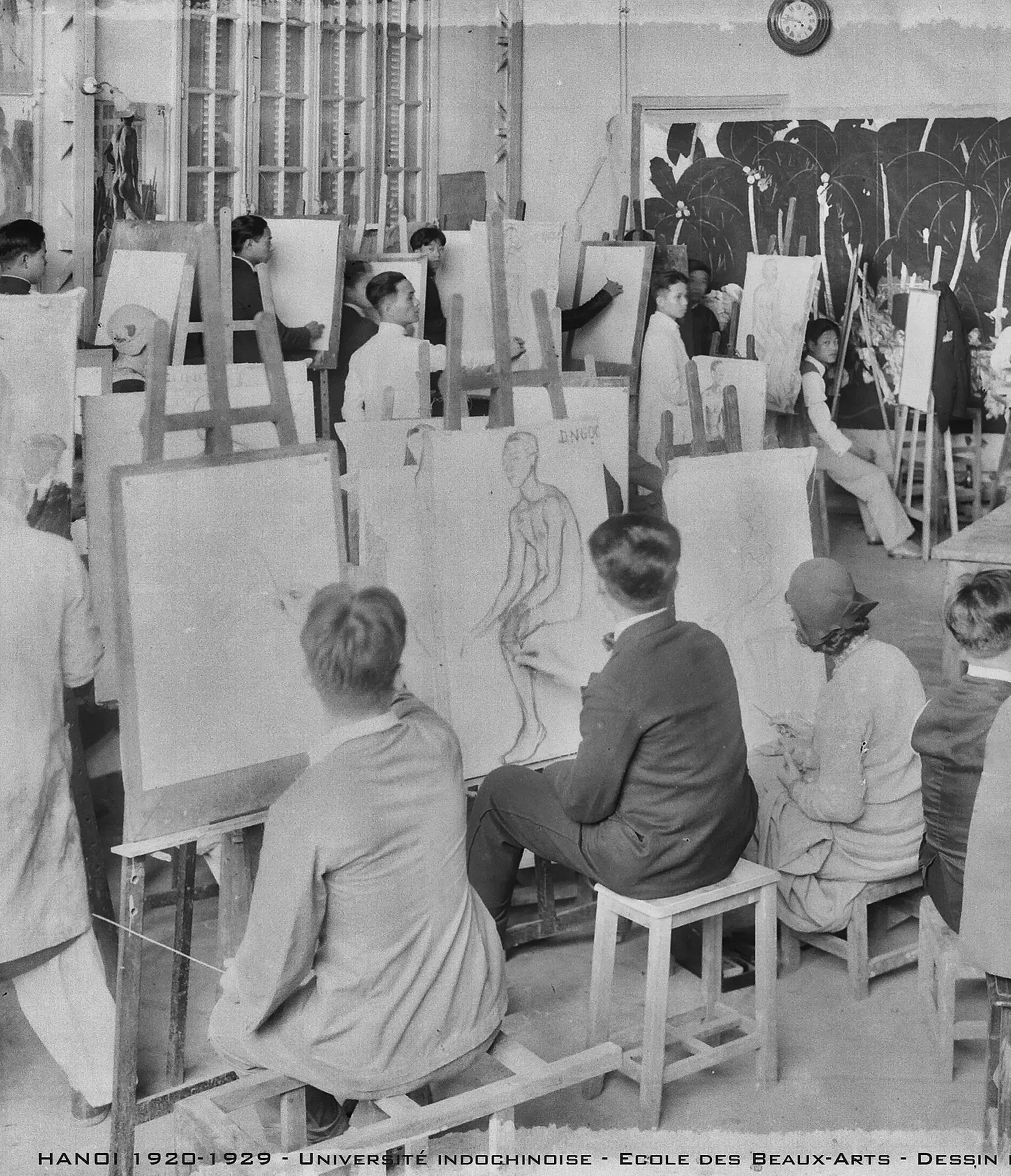
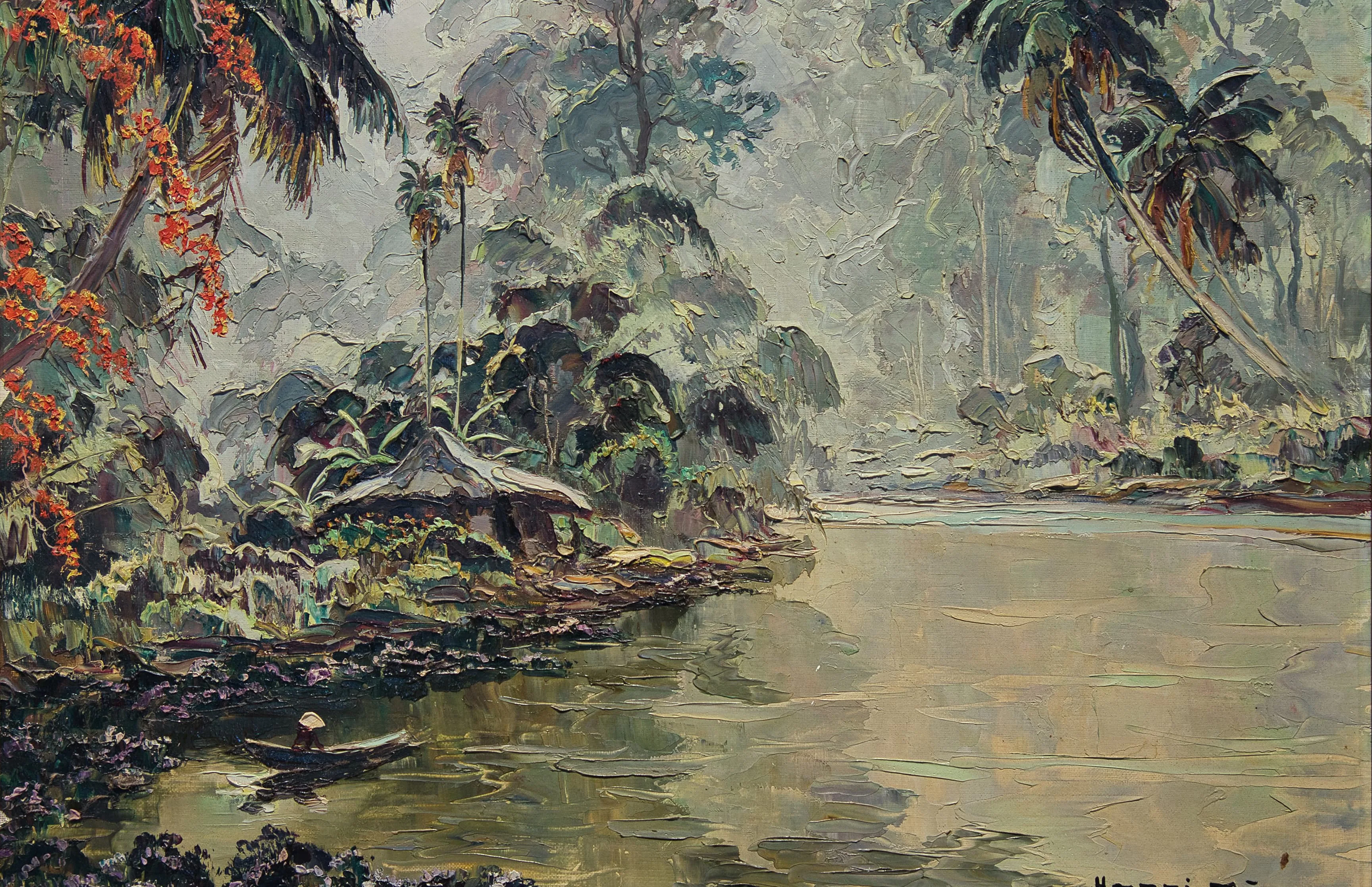
From his earliest days in Indochina, Inguimberty demonstrated a passionate love for nature, light, landscape, and local life. He did not hide his admiration for the rice fields, villages, and the simple beauty of the Annamese people — a sentiment he expressed through strong brushwork and his signature mossy green palette, neutral and deeply attuned to the terrain. Art critic Nguyễn Quang Phòng once remarked that Inguimberty painted “exactly like a Vietnamese artist who understands and loves his homeland.” Although his time was limited due to teaching duties, his depictions of rural life and rice paddies were always marked by authenticity.
Unlike many Western lecturers of the time who leaned toward academic and theoretical instruction like Victor Tardieu, Inguimberty championed a practical teaching approach. He consistently encouraged students to observe, sketch from life, and draw inspiration from their surroundings. He paid special attention to indigenous elements in art while guiding his students to develop unique personal styles. Under his mentorship, many students—including Lê Phổ, Nguyễn Gia Trí, Nguyễn Phan Chánh, Mai Trung Thứ, Tô Ngọc Vân, and Vũ Cao Đàm—rose to become key figures in modern Vietnamese art. His students often affectionately referred to him as “Cụ I,” a tender nickname for their teacher.
One of Inguimberty’s most lasting contributions to Vietnamese art was his pioneering role in transforming traditional lacquer (sơn ta) into a medium for modern painting. In 1927, he was the first to propose the establishment of a lacquer workshop on campus, encouraging students to experiment with sơn ta in a spirit of innovation. By 1938, under the leadership of Évariste Jonchère (1892–1956), lacquer was officially included in the curriculum, taught by artisan Đinh Văn Thành (1898–1977) and French painter Alix Aymé (1894–1989).
It was Inguimberty’s pioneering efforts that laid the groundwork for the evolution of lacquer painting from a folk decorative art into a modern expressive medium—one of the most distinctive and defining achievements of 20th-century Vietnamese art. As Nguyễn Gia Trí—one of the greatest names in Vietnamese lacquer painting—once acknowledged his teacher’s irreplaceable influence:
“Without Cụ I and artisan Thành, there would be no lacquer art of mine. Cụ I’s merit is immense.” (Nguyễn Gia Trí, 01/08/1980).
His works often reflect a fusion between European formal sensibilities and Eastern aesthetics. The painting Two Vietnamese Girls (ca. 1940–1943) is a prime example: vigorous lines, a mossy green palette saturated with Inguimberty’s identity, and a simple composition capturing the quiet yet profound life of the Vietnamese people. In a 1929 article published in L’Extrême Asie, he shared a special fondness for Kim Liên Village (Hanoi), where he built a small thatched hut to paint on-site, living among the light, humidity, and local inhabitants.
After leaving Vietnam, Inguimberty continued to create art in France, but never ceased to cherish the Eastern land that had nurtured his artistic soul for more than a decade.